
The Scientific Committee of the Jacques Suaudeau Award has selected the research paper “Organ Donation Following Euthanasia: Does It Contribute to the Normalization and Justification of Euthanasia?”, supervised by Dr. José Manuel Álvarez Avello, as the recipient of this year’s award.
In recognition of its relevance and the quality of the research, the paper will be published by the Jérôme Lejeune Foundation to make it available to a wider audience.
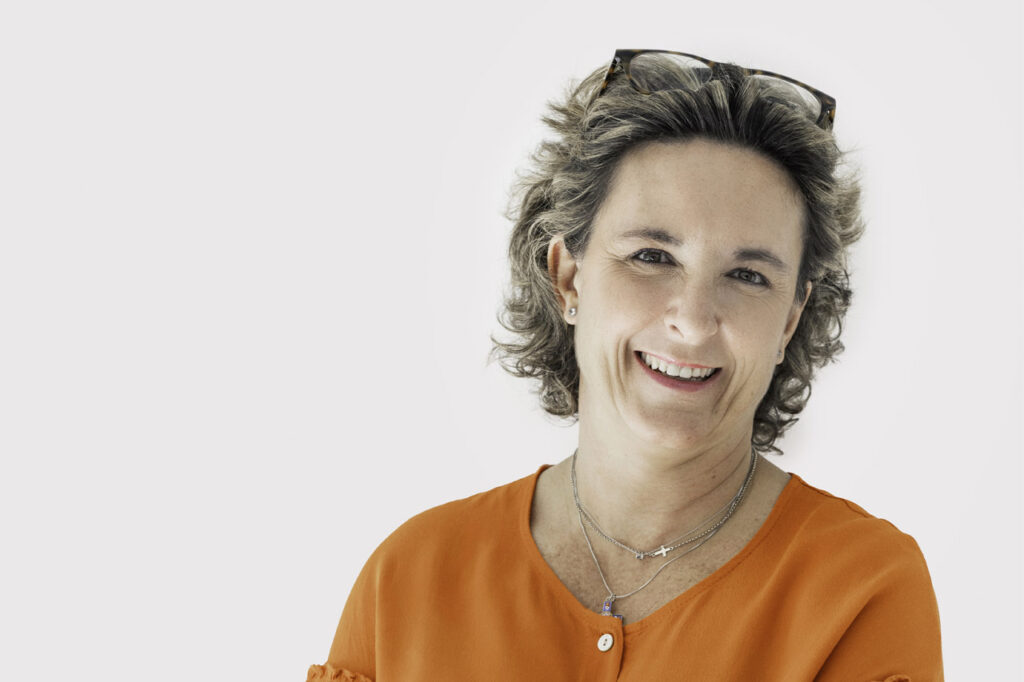
Madrid, December 21, 2023 — The International Chair of Bioethics Jérôme Lejeune has awarded Ms. Rafaela de la Brena the 2023 Jacques Suaudeau Award for Best Bioethics Research Paper, in recognition of her outstanding work, which will be published by the Jérôme Lejeune Foundation.
The research was carried out as part of Ms. de la Brena’s participation in the Master’s Degree in Bioethics jointly offered by the Jérôme Lejeune Foundation and Francisco de Vitoria University.
A total of six research papers of outstanding scientific quality were submitted for this first edition of the award.
According to Dr. Mónica López Barahona, Chair of the Scientific Committee: “The first Jacques Suaudeau Award has been presented to Ms. Rafaela de la Brena because, in addition to being an outstanding interdisciplinary research project in Bioethics, exceptionally well written, it addresses one of the most pressing issues in today’s social context: organ donation following euthanasia, a matter of great significance that raises important ethical concerns.”
The Scientific Committee was composed of:
- Dr. Mónica López Barahona (Chair), President of the Jérôme Lejeune Foundation and Holder of the International Chair of Bioethics Jérôme Lejeune.
- Nicolás Jouve, Emeritus Professor of Genetics, University of Alcalá.
- Natalia Ochoa, Professor of Public International Law, Camilo José Cela University.
- Sagrario Crespo, Professor of Bioethics, Francisco de Vitoria University.
- Elena Postigo, Adjunct Professor of Bioethics, Francisco de Vitoria University.
About the Jérôme Lejeune Foundation
The Jérôme Lejeune Foundation was established in France in 1995 following the death of Dr. Jérôme Lejeune, widely regarded as the father of modern genetics after discovering, in 1958, that Trisomy 21 is the genetic cause of Down syndrome.
The Foundation invests between €4 and €5 million annually in research, maintains a biobank in Paris containing more than 20,000 biological samples, and operates four medical centers located in Paris, Nantes (France), Córdoba (Argentina), and Madrid. More than 12,000 patients have been treated at its Paris medical center.
In 2009, the Foundation established the International Chair of Bioethics Jérôme Lejeune, under the direction of Dr. Mónica López Barahona. In 2015, it opened its permanent delegation in Spain, and in February 2023 inaugurated the first Jérôme Lejeune Medical Institute in Spain, thanks to the collaboration of several organizations, including the Álvaro Entrecanales Foundation.
About Dr. Jacques Suaudeau
Monsignor Jacques Suaudeau (1941–2022) was a physician, Catholic priest, and internationally recognized scholar in Bioethics.
Born in Oran, Algeria, he devoted the first four decades of his professional life to medicine. After working as an internist in the hospitals of Grenoble, he completed his medical doctorate before pursuing research in the United States at the National Institutes of Health (NIH), Massachusetts General Hospital, and Yale University.
In 1981, he chose to enter the priesthood and was ordained in 1985 for the Diocese of Grenoble. He later pursued advanced studies in moral theology at the Pontifical Gregorian University in Rome while also completing a master’s degree in history at the University of Lyon.
From 1993 to 2003 he served at the Vatican in the Pontifical Council for the Family, before becoming Scientific Director of the Pontifical Academy for Life, a position he held from 2003 to 2014. During these years he also earned a doctorate in theology from the John Paul II Institute and a master’s degree in Art History and Archaeology from Paris-Sorbonne University.
He was appointed Honorary Prelate in 2010, became a consultant to the Pontifical Council for Health Pastoral Care in 2012, represented the Holy See on the Council of Europe’s Bioethics Committee from 2006, and served as the Holy See’s delegate to UNESCO’s Intergovernmental Bioethics Committee beginning in 2010.
After his retirement in 2014, Monsignor Suaudeau returned to Voiron, France, where he continued his priestly ministry in healthcare pastoral work. He also remained closely involved with the Jérôme Lejeune Foundation, serving on its Board of Directors from 2015.
Throughout his distinguished career, he authored numerous books and contributed significantly to ethical reflection on many of the major bioethical issues of our time, including cloning, assisted reproduction, end-of-life care, stem cell research, organ donation, HIV treatment, conscientious objection, and, more recently, the ethical questions surrounding COVID-19 vaccines. During the final years of his life, he taught in the Foundation’s Master Class in Bioethics in Paris.
Monsignor Jacques Suaudeau passed away on July 28, 2022, in Grenoble.
